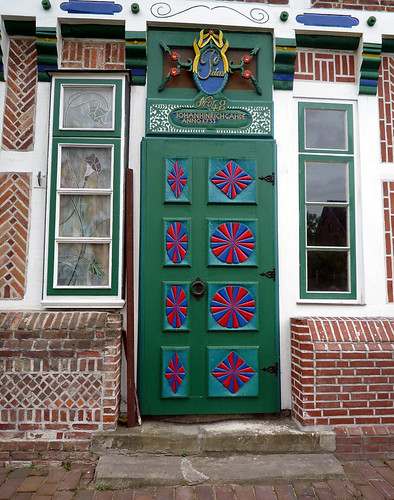
Het “Altes Land” is een Duits gebied langs de Elbe, direct ten zuidwesten van de stad Hamburg. Het ligt aan de zuidelijke oever van de Elbe, tussen Stade en Buxtehude. Het gebied omvat ook Jork, de Samtgemeinde Lühe en delen van zuid-Hamburg (Neuenfelde, Cranz, Francop en Finkenwerder).
Het Altes Land is waarschijnlijk het grootste aaneengesloten fruitteeltgebied in Centraal-Europa. De regio omvat zo'n 143 km². Ongeveer tweederde van het fruitteeltgebied bestaat uit appelbomen. Kersenbomen staan op de tweede plaats; zo'n 13% van de fruitbomen bestaat uit verschillende kersensoorten.
De naam Altes Land is een verbastering van de Nedersaksische naam Olland voor dit gebied, een verwijzing naar de Nederlandse kolonisten die het gebied in de middeleeuwen inpolderden. In 1113 sloot aartsbisschop Frederik I van Bremen een verdrag met Nederlandse kolonisten om het moerasachtige gebied te omdijken en in te polderen. Priester Hendrik uit het Zuid-Hollandse Rijnsaterwoude wordt gezien als de stichter van het Altes Land. In Steinkirchen, een dorp in het Altes Land, staat een standbeeld van Priester Hendrik, en in Rijnsaterwoude staat een kopie van dit standbeeld.
“Altes Land” is an area of reclaimed marshland straddling parts of Lower Saxony and Hamburg. The region is situated downstream from Hamburg on the southwestern riverside of the Elbe around the towns of Stade, Buxtehude, Jork and the Samtgemeinde of Lühe. In Hamburg it includes the quarters of Neuenfelde, Cranz, Francop and Finkenwerder.
The region – the biggest contiguous fruit orchard in Central Europe – extends over 143 km2 (55 sq mi). 76.8% of the trees are apples, 12.7% are cherries.[1] The areas closest to the Elbe are those with the highest population. They include the most fertile marshlands; towards Geest the area connects to fens.
The fertile land led to the development of a culture dominated by farming. The villages are known as Marschhufendörfer, a special kind of village where the farmyards are set along a street with the land directly behind them. A characteristic feature is the richly-decorated half-timbered farmhouses with their elaborate gateways.
vlgs.Wikipediaa
Bild von tdietmut

Keine Kommentare:
Kommentar veröffentlichen